AWARDS & GRANTS
Awards & Grants > Society Awards > Honorary Award

HONORARY AWARD
This annual award can be presented at the Annual Symposium to an individual in recognition of their contributions to the field of Neurotrauma.
The award recognizes efforts and accomplishments in the areas of public awareness, promotion, research and education. This Honorary Award is the highest honor that NNS bestows on an individual.
Award & Recognition
The award includes a plaque, which will be presented at the Annual Symposium, along with complimentary registration for the event.
Application Dates
Application Opens: January 12, 2026
Application Ends: 12:00ET, March 23, 2026
Nominations closed
Nomination Criteria
The person nominating would choose the nomination category from the following list. Each year, the award can have a different emphasis. An award may not necessarily be named every year.
Advocate / Champion: Promoting Neurotrauma awareness on a national or international level
Researcher: Making significant advancements in knowledge/research
Service: Contributing to dramatic improvements in quality of life for individuals suffering Neurotrauma
Policy / Visionary: Providing excellence in Neurotrauma promotion programs, projects or policies
Educator: Actively teaching, training, and/or being involved in ongoing outreach activities to promote the understanding of Neurotrauma
Previous Award Recipients
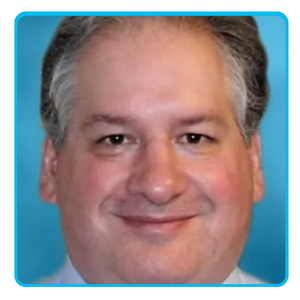
C. Edward Dixon, PhD
Dr. Dixon is a Professor, Vice Chair for Research, and Endowed Chair for Neurotrauma in the Department of Neurological Surgery at the University of Pittsburgh. He has secondary appointments in the Departments of Physical Medicine and Rehabilitation, Critical Care Medicine, and Neurobiology. He is also Research Health Scientist at the Geriatric Research, Education and Clinical Center in the Veteran’s Affairs Pittsburgh Health Care System. Dr. Dixon received his Ph.D. degree in Physiological Psychology from the Virginia Commonwealth University and was awarded a National Research Service Award for Postdoctoral Fellows by the NIH in 1985 joined the Division of Neurological Surgery at the Medical College of Virginia. In 1986, he became a postdoctoral fellow in the CNS Injury Group in the Biomedical Science Department of the General Motors Technical Center. Dr. Dixon was named Assistant Professor in the Division of Neurosurgery at the Medical College of Virginia in 1987. He was awarded the Young Investigator Award from the National Head Injury Foundation in 1990. He became an Assistant Professor in the Department of Neurological Surgery at the University of Texas Health Science Center in Houston in 1991. In 1995, he joined the Brain Trauma Research Center in the Department of Neurological Surgery at the University of Pittsburgh and became its Director in 2004. Dr. Dixon is a charter member, Past-President (2002-2003) of the National Neurotrauma Society. Dr. Dixon serves on the editorial boards of the Journal of Neurotrauma, Neural Regeneration Research, Frontiers in Neurotrauma, and Metabolic Brain Disease. Dr. Dixon founded and directed the website for the National Neurotrauma Society (www.neurotrauma.org) from 1997-2012. He has served as regular member on the NIH Brain Injury and Neurovascular Pathologies study section, as well as a regular grant reviewer for other private, state, and federal agencies, including the VA. He has been the recipient of several federal grants including program projects, RO1s, and Merit Awards. Dr. Dixon is a member of the Steering Committee for PRE Clinical Interagency reSearch resourcE-TBI (PRECISE-TBI) as a member of the multi-PI team of investigators. As part of the PRECISE-TBI, he directs the Preclinical Model Catalogue Core.
Dr. Dixon has contributed significantly to the evolution of animal models of traumatic brain injury, including the development and characterization of the first rat fluid-percussion and control cortical impact models of traumatic brain injury. Dr. Dixon has a long interest in mechanisms of posttraumatic functional deficits and has published extensively on neurochemical mechanisms and chronic therapies for posttraumatic cognitive deficits.
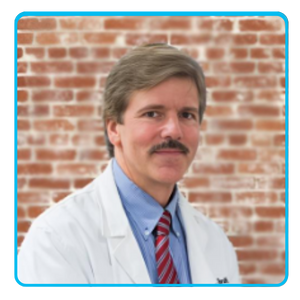
Douglas H. Smith, MD
As one of the world’s foremost experts on concussion and more severe forms of traumatic brain injury (TBI), Dr. Smith is the Robert A. Groff Endowed Professor of Neurosurgery and Director of the Center for Brain Injury and Repair at the University of Pennsylvania. His international leadership includes currently serving as President-elect of the National Neurotrauma Society and as the Scientific Director of the Big 10/ Ivy league Collaboration on Concussion. He also serves as a member of the Scientific Advisory Boards of the US National Football League (NFL), the National Collegiate Athletic Association (NCAA)-DoD consortium on concussion and the International Concussion Society. Furthermore, Dr. Smith serves as an inaugural trustee of the Mind Your Brain Foundation, a non-profit organization dedicated to outreach and education of brain injury patients and caregivers.
Dr. Smith contributions include the discovery of the underlying cause of concussion symptoms as well as approaches for its diagnosis and treatment. Specifically, his group identified that physical and functional damage to nerve fibers (axons) due to concussion disrupts electrical signaling through brain networks and that blood biomarkers of axonal damage can be used to predict the length of recovery. In addition, his group was the first to discover mechanisms of concussion and more severe traumatic brain injury that lead to progressive neurodegeneration, including chronic traumatic encephalopathy and Alzheimer’s disease.
Dr. Smith’s work attracted attention of the U.S. State Department who asked him to assemble a team of experts to investigate mysterious neurological deficits affecting members of the US embassy in Cuba. Their findings led to a newly discovered disorder, “Havana Syndrome.” Dr. Smith’s collective efforts are represented in over 300 published scientific reports that are among the most highly cited in the field. From this work, Dr. Smith is ranked amongst the top of world scientists. His awards include the Dorothy Russell medal, the highest honor conveyed by the British Neuropathological Society, the William Osler Patient Oriented Research Award from the University of Pennsylvania, the Anthony B. Marmarou Memorial Neurotrauma Lecture Award from the American Association of Neurological Surgeons and Congress of Neurological Surgeons and the Deal of the Year Award from Penn’s Center for Innovation for a licensed invention that has promise in repairing the brain.
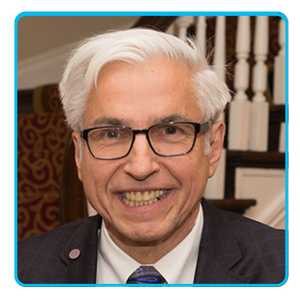
Patrick M. Kochanek, MD
Patrick Kochanek, MD MCCM is a Distinguished Professor of Critical Care Medicine, the Ake & Inger Grenvik Professor of Critical Care Medicine, and a Professor of Pediatrics, Anesthesiology and Perioperative Medicine, and Clinical and Translational Science at the University of Pittsburgh School of Medicine, where he has served on the faculty since 1986. He received his Bachelor of Science Degree from the University of Michigan, and his MD, AOA from the University of Chicago. After a residency in Pediatrics at the University of California San Diego, he completed a fellowship in Pediatric Critical Care Medicine at Children’s National Medical Center in Washington DC, before being recruited to the Critical Care Medicine faculty in Pittsburgh. In 1994 he was named director of the International Resuscitation Research Center, following the footsteps of legendary CPR pioneer Dr. Peter Safar. Dr. Kochanek renamed the Center, the Safar Center for Resuscitation Research, which he has directed for 31 years. Dr. Kochanek expanded the Center’s research in traumatic brain injury, which complimentedits renowned cerebral resuscitation research, and he expanded its pediatric component. Among his many accomplishments, Dr. Kochanek led the first multi-center pre-clinical therapy and biomarker screening consortium in TBI, Operation Brain Trauma Therapy (OBTT) and has focused on the topics of neuroinflammation, neuroprotection, and hypothermia in acute brain injury. Under his leadership, the Safar Center has grown to house a multi-departmental faculty including Critical Care Medicine, Neurological Surgery, Physical Medicine and Rehabilitation, and others, that has launched countless trainees to careers of national and international prominence. In addition to his over 650 publications—which have been cited nearly 30,000 times—he served as Editor-in-Chief of the journal Pediatric Critical Care Medicine for 20 years and is an Associate Editor for the Journal of Neurotrauma.
2021 NNS Honorary Award: John Povlishock
2020 NNS Honorary Award: Donald Stein
2016 NNS Service Award: David Hovda
2015 NNS Service Award: Ramona Hicks
2014 NNS Advocate Awards: Scott Hamilton, Roman Reed & Kevin Pearse
2007 WiNTR Service Award: Helen Bramlett & David Hovda
2005 NNS Service Award: David Graham
2003 NNS Service Award: Donald Becker