ABOUT NNS
About > In Memoriam
IN MEMORIAM
Celebrating Lives & Contributions
The Neurotrauma Society honors the memory of members, mentors, and pioneers whose contributions have shaped the field of neurotrauma. Their dedication to advancing science, improving patient outcomes, and supporting the professional community continues to inspire our work. This is a space to reflect, remember, and celebrate the legacies of those we’ve lost.
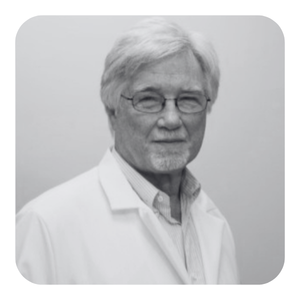
Dr. Reggie Edgerton
MAR 2025
Dr. Reggie Edgerton
MAR 2025
We were recently saddened to hear the news of Professor Reggie Edgerton’s passing. In his career of over 60 years, his research helped establish the scientific basis for modern neuromodulation and rehabilitation methods. He will be dearly missed, and our thoughts are with those closest to him.
On this page you can read two touching tributes to the late Professor from James Guest, Chair of Spinal Research Strategic Advisory Committee and Professor of Neurological Surgery at The Miami Project to Cure Paralysis, and Professor Ronaldo Ichiyama, Chair of Spinal Cord Injury Research and member of the Grant Advisory Committee with Spinal Research.
James Guest, Chair of Spinal Research Strategic Advisory Committee and Professor of Neurological Surgery at The Miami Project to Cure Paralysis
Professor Reggie Edgerton, who passed away recently, was a towering figure in spinal cord research. A highly skilled physiologist and a true scholar of the spinal cord. Over nearly six decades, starting with his first publication in 1969 on muscle histology, he authored nearly 550 scientific papers that profoundly shaped our understanding of neuromuscular and spinal cord physiology.
Professor Edgerton’s work was groundbreaking in defining the principles of locomotor networks within the spinal cord, clarifying the capacity for spinal cord plasticity, and advancing the idea of spinal cord learning.
His research helped establish that the spinal cord is not just a passive conduit but an adaptable and responsive system capable of interpreting sensory input and reorganizing function after injury.
A hallmark of his career was his commitment to mentorship. He trained numerous students and postdoctoral fellows who have gone on to distinguished careers, extending his scientific legacy across generations.
His scientific vision also emphasized the importance of activity and exercise in recovery. He played a key role in promoting the idea that locomotor training could activate innate spinal mechanisms, enabling the nervous system to “remember” and improve learned motor patterns even after severe injuries. This inspired rehabilitation efforts that clarified principles of locomotor recovery widely used today, including epidural and transcutaneous spinal cord stimulation to enhance function after spinal cord injury.
I first began corresponding with Reggie in 2005 about large-animal models of spinal cord injury, starting a dialogue that has lasted over twenty years. In October 2011, I visited the University of Louisville during the earliest human trials with epidural stimulation, work deeply rooted in the foundational knowledge generated by Reggie and his colleagues. These pioneering studies were made possible by his insights into how the spinal cord responds to training and sensory input, and how these responses can help restore function after paralysis. A later visit to his lab in 2015, with one of my postdoctoral fellows, showed a lively and collaborative scientific environment. It was a place driven by discovery, mentorship, and good humor.
Professor Edgerton’s legacy lies not only in the knowledge he generated but also in the paradigm shift he helped create, moving from viewing paralysis as permanent to recognizing it as a condition with latent potential for recovery. His work helped establish the scientific basis for modern neuromodulation and rehabilitation methods that continue to transform lives. He will be remembered as an innovator, mentor, and scientist whose curiosity and rigor reshaped the field. His influence remains evident in the work of his trainees and collaborators, as well as in the renewed hope his discoveries have inspired for individuals living with spinal cord injury.
Professor Ronaldo Ichiyama, Chair of Spinal Cord Injury Research and member of the Grant Advisory Committee with Spinal Research
Few scientists have had the impact on people living with spinal cord injury today as Reggie has. In this challenging field of clinical science where progress seems frustratingly slow, limited and at times impossible Reggie’s vision has provided the possibility of significant functional recovery and the hope for even further progress.
Reggie will always be remembered as a true scientist by his peers and mentees alike. He loved science and often reminded us how much he loved his job. I remember numerous times Reggie telling a group of us how lucky we were to get paid to do what we do. Reggie’s appetite for new discoveries and new knowledge was not only apparent in the lab, but in every scientific meeting he participated. Without fail, you could catch Reggie from 8:00am visiting every poster, taking notes and talking to each scientist for all five days of the Annual Meeting of the Society for Neuroscience. And this was often after late dinners and invariably a late night at a jazz club. I never understood how he did that. It feels fitting, then, that Reggie stayed true to what he loved most until the very end.
I am sure everyone who have worked with Reggie will agree that his passion for science, – and by science, he meant the spinal cord and neuromuscular system -was contagious. Reggie often joked about how the spinal cord already “knew” what to do and that the “the brain got in the way”. Joking aside Reggie’s belief in unlocking the spinal cord potential beyond the textbook descriptions of a “collection of cables” connecting the “all important” brain with peripheral organs and muscles has propelled the field into the next stage of neurorehabilitation and neuromodulation in spinal cord injury.
Reggie was an innovator at heart, unafraid of asking new questions, diving into new domains and scientific fields. The development of the now influential neuromodulation modalities in SCI stems directly from Reggie’s curiosity and knack for innovation. The entire field now lives with the fruits of both epidural and transcutaneous electrical stimulation due to Reggie’s and longtime collaborator Yury Gerasimenko’s work in this area.
His legacy will live on in all of us and in future generations of scientists, clinicians and people living with SCI.
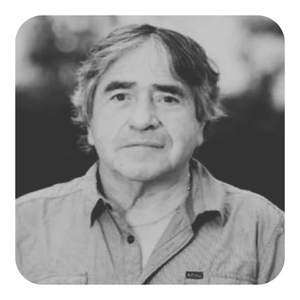
Dr. Fernando Gómez-Pinilla
DEC 2025
Dr. Fernando Gómez-Pinilla
DEC 2025

Dr. Victoria E. Johnson
SEPT 2025
Dr. Victoria E. Johnson
SEPT 2025
NNS President, 2025-2026
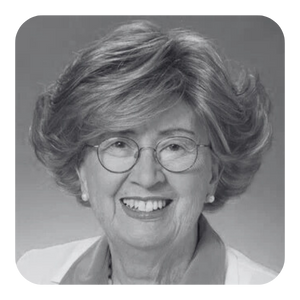
Dr. Mary Bartlett Bunge
FEB 2024
Dr. Mary Bartlett Bunge
FEB 2024
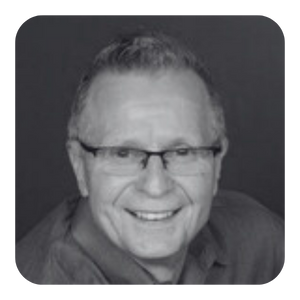
Ronald L. Hayes, Ph.D.
NOV 2023
Ronald L. Hayes, Ph.D.
NOV 2023
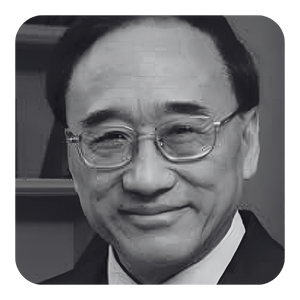
Dr. Xiao-Ming Xu
FEB 2023
Dr. Xiao-Ming Xu
FEB 2023
Wei Wu, MD, PhD, Board member of CNSA (2022-2023)
Zezong Gu, MD, PhD, President of CNSA (2021-2023)
Linda J Noble-Haeusslein, PhD, Professor, Departments of Neurology and Psychology, University of Texas at Austin
On behalf of the CNSA Board and NNS Program Committee
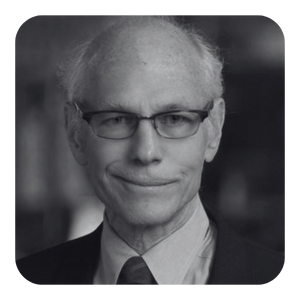
Dr. Harvey Levin
APR 2022
Dr. Harvey Levin
APR 2022
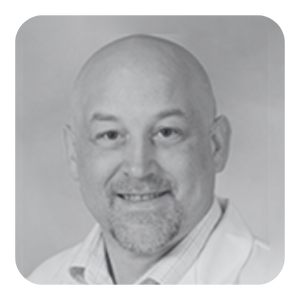
Raymond Grill, PhD
MAY 2019
Raymond Grill, PhD
MAY 2019
Executive Director, TIRR Foundation
Timothy Schallart, PhD
MAY 2018
Timothy Schallart, PhD
MAY 2018
Professor, University of Texas at Austin
Dr. Marion Murray
SEPT 2018
Dr. Marion Murray
SEPT 2018
Professor and Chair of Department of Neurobiology and Anatomy
College of Medicine, Drexel University
Dennis M. Feeney, PhD
APR 2018
Dennis M. Feeney, PhD
APR 2018
Professor and Vice Chair of Academic Affairs, UCLA
Dr. Walter Koroshetz
JAN 2026
Dr. Walter Koroshetz
JAN 2026
“A life lived for others is a life worthwhile.”
Albert Einstein